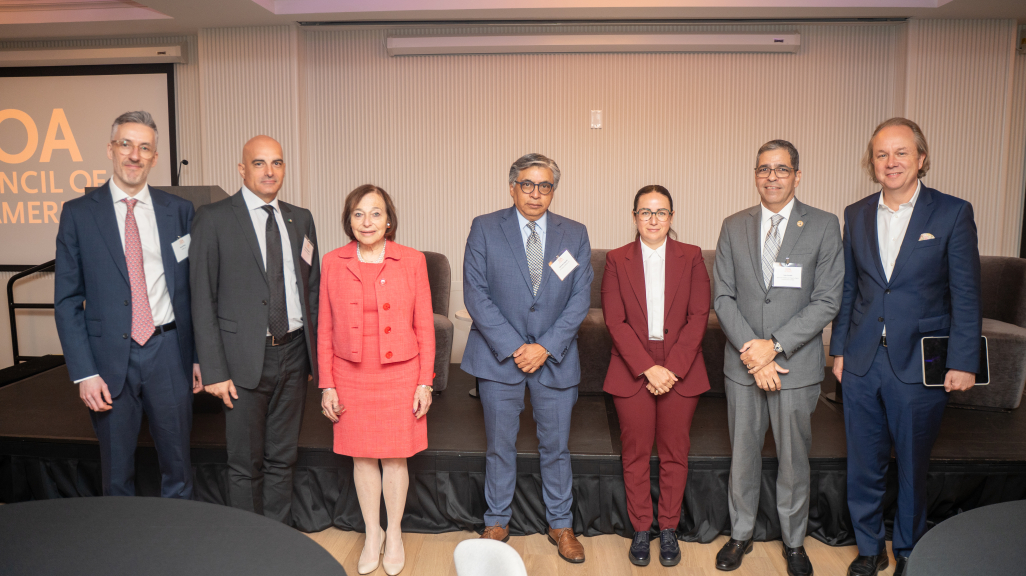
Speakers posing

(L-R): David Bird of KPMG; Marco Hannappel of PMI; Susan Segal of AS/COA; economist Gerardo Esquivel; Cecilia Farfán of the Global Initiative Against Transnational Organized Crime; Iván Arvelo of DHS-HSI; and Brian Winter of Americas Quarterly. (Photo: Shawne Turrentine)

Share

AS/COA Looks at How Illicit Trade Impacts Security, Finances, and Health in the Americas

A program with experts and leaders from the public and private sector included a panel on the challenges posed by illicit tobacco trade in the region.

Washington, DC, April 15, 2026—Americas Society/Council of the Americas (AS/COA) held a program with experts and leaders from both the public and private sectors to examine the impact of illicit trade, which is a significant challenge across the Americas, generating substantial revenue for organized criminal networks while undermining security, public health, and economic development.

Panelists explored how appropriate regulation, enforcement, and public-private cooperation can disrupt illicit trade, including clamping down on counterfeit goods and smuggling network. They can also help to recover public revenue and protect consumers.

"Illicit trade is often misunderstood as a secondary or isolated challenge. In reality, it sits at the intersection of some of the most pressing issues facing our region today," said Susan Segal, president and CEO of AS/COA. "What makes this issue particularly challenging is its interconnected nature. Illicit markets operate as part of broader criminal ecosystems that adapt quickly across borders and sectors. Addressing them therefore requires more than enforcement alone. It calls for smarter regulation, stronger institutions, and, importantly, deeper collaboration between governments and the private sector."

Chris Landberg, senior bureau official at the Department of State’s Bureau of International Narcotics and Law Enforcement Affairs, gave keynote remarks. 

"Transnational criminal organizations infiltrate the systems of commerce and trade that fuel our economic growth and obscure their criminal enterprise within these licit activities," said Landberg. "We all are affected by organized crime in the region, and we all share a responsibility to combat it."
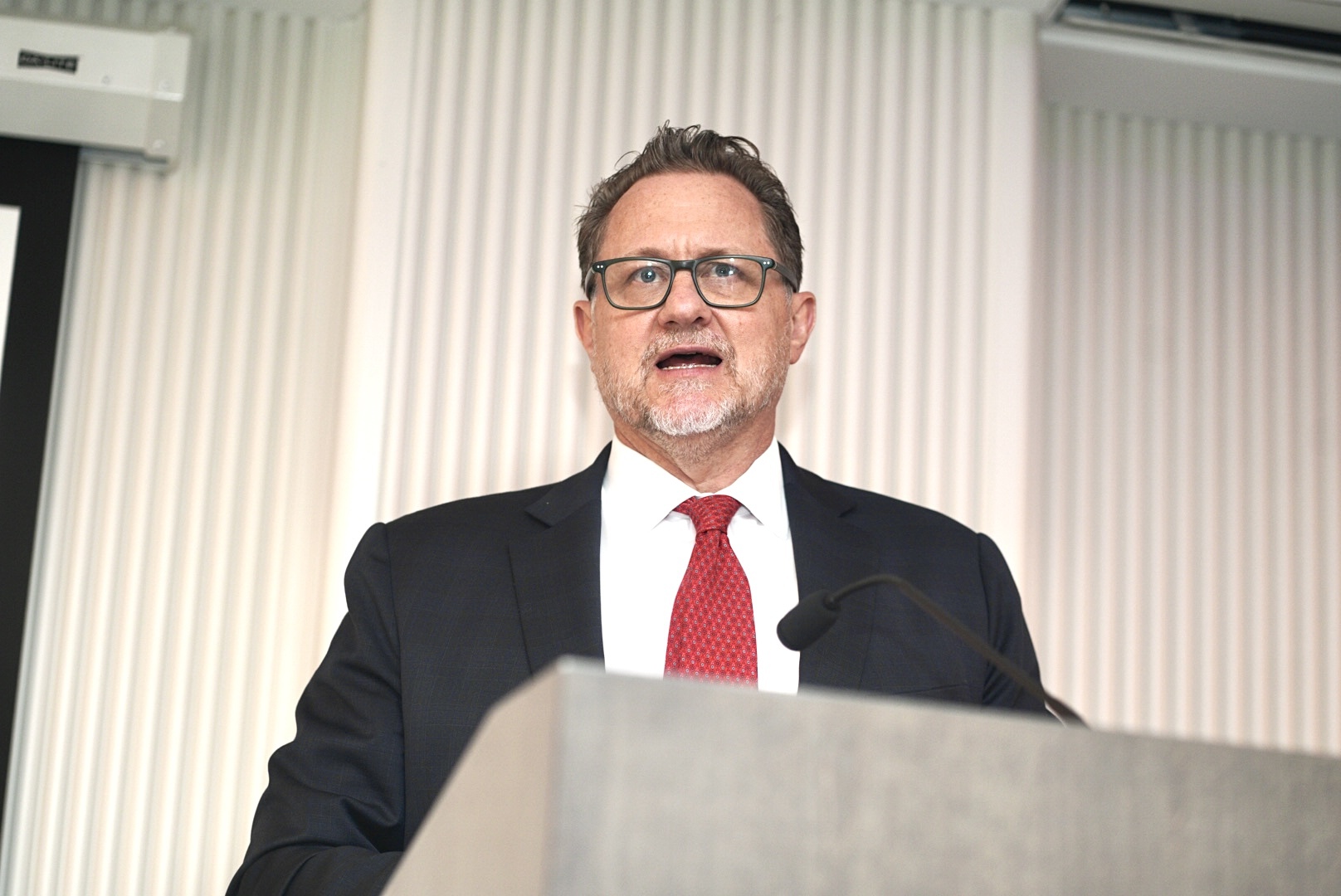
Chris Landberg

 Chris Landberg of the Department of State's Bureau of International Narcotics and Law Enforcement Affairs. (Photo: S. Turrentine)
David Bird, associate director at KPMG, presented the report "Illicit cigarette consumption in Latin America and Canada 2025," which showed that almost a third of cigarettes consumed in the region are illicit, making it a global hotspot for illicit cigarette consumption.

Speakers at the event concluded that this reflects not only the size of the problem, but also the complex structural conditions that allow illicit markets to flourish, like established cross-border supply chains, regulatory gaps and uneven enforcement capacity.

The KPMG report presented at the event also showed that Ecuador and Panama now record two of the highest illicit market shares on the planet, with 84 percent of all cigarettes consumed being illicit in Ecuador and 89 percent in Panama. Illicit trade also drains public finances at scale: An estimated $8.5 billion was lost in tax revenue across Latin America and Canada in 2025 because of illicit cigarette consumption, according to the report, with Brazil, Canada, and Mexico facing the highest fiscal losses.

The discussion, done in collaboration with Phillip Morris International, included keynote remarks by Marco Hannappel, president of the company's Latin America and Canada region.

“Illicit tobacco trade affects public health, weakens institutions, drains public finances, and strengthens criminal organizations. Addressing it requires coordinated action. More regulatory certainty and stronger enforcement are necessary, along with innovation, information, and cooperation between the private, public, and social sectors. Better outcomes are possible, but only if we choose facts over assumptions and prejudice,” said Hannappel at the event.

The event included a panel on illicit trade in which experts discussed this growing problem. Speakers were Gerardo Esquivel, Mexican economist; Cecilia Farfán, head of the North American Observatory, Global Initiative against Transnational Organized Crime; Iván Arvelo, director of the National Intellectual Property Rights Coordination Center (DHS-HSI); and Brian Winter, editor-in-chief of Americas Quarterly.

"Illicit trade undermines the safety of our communities and the strength of our economies," said Arvelo. "Every day, we see how criminal networks adapt and exploit vulnerabilities in our supply chains. The most effective response is a united one, where government agencies and private sector partners share information and resources, we can identify threats faster, disrupt illegal operations, and protect both people and businesses across the world."

Contact for press: mediarelations@as-coa.org