


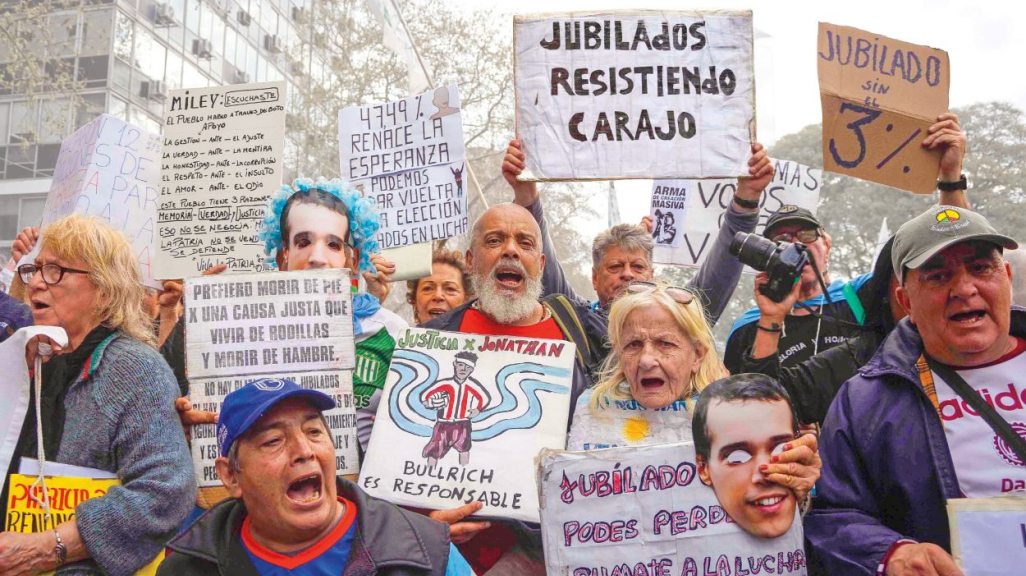
Americas Quarterly's New Issue: Latin America's "Gray Tide" Is Already Here
Americas Quarterly's New Issue: Latin America's "Gray Tide" Is Already Here
The magazine explores the region's dramatic demographic transformation and its impact on politics, economics, and everyday life.
Read the press release in Spanish and Portuguese.
New York, April 21, 2026 — “Latin America is now aging faster than any other region in the world,” writes Laurence Blair, the author of the cover story of Americas Quarterly's new issue. The region “is in the early days of a historic demographic transformation, one that seems destined to reshape politics, businesses, communities, and how people live for decades to come.”
Blair, a South America-based journalist and consultant, went to Uruguay to look at this trend closer. In Uruguay, only about 29,000 babies were born last year, down from 49,000 a decade ago, and deaths have outnumbered births for six years straight. But the story is regional: according to the UN, the Latin American fertility rate has fallen to 1.8 births per woman, below the replacement level of 2.1, down from six in 1950. If current trends hold “national populations will decline by a third in Chile and Uruguay, a quarter in Brazil, and a fifth in Argentina” by 2100.
"The main challenge for Latin America," Ernesto Revilla, chief economist for Latin America at Citigroup, told Blair, "is that the region will get old before it gets rich." The article, titled “The Gray Tide,” explains that while this transition presents challenges for pension systems and schools, it also offers significant silver linings. The changing demographics are fueling a "silver economy" in sectors like healthcare, robotics, and accessible tourism, which is projected to reach $650 billion in Latin America by 2033.
What's Behind the Shift
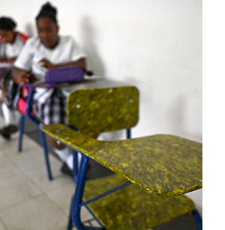
Journalist Michael Rendón Vera and AQ editors Miranda Mazariegos and Rich Brown examine the critical but often understudied roles of race, migration, and gender in driving Latin America's demographic transformation. Moreover, the authors argue that these intersecting forces will determine which communities will bear the systemic weight of an aging society.
Latin America's Demographic Transformation by the Numbers
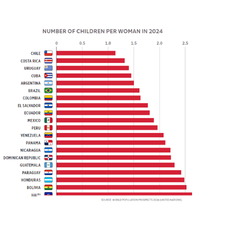
Emilie Sweigart, editor at AQ, tracks the key demographic indicators and forecasts shaping the region. Her report includes numbers on the rapid rise of the population aged 65 and over, infant mortality rates, fertility rates, and percentage of female unpaid care workers for older people.
To Manage Latin America's Demographic Shifts, Support Women
Susan Segal, president and CEO of Americas Society/ Council of the Americas, writes about how these demographic shifts also reflect hard-won gains for women in education, professional opportunity, and reproductive autonomy. Segal argues that governments, however, can do more to manage the transition in ways that continue to advance gender equity.