


Americas Quarterly writes about Amazonia Açu
Americas Quarterly writes about Amazonia Açu
The exhibition proves "that there is much more to the region than meets the eye," says AQ about Americas Society's show on Amazonian communities.
Conversations about the Amazon tend to center on the physical world: the practical or the scientific. When people talk about the rainforest, they talk about illegal logging, water stress, droughts or deforestation. They talk about rivers, plants or poisonous frogs. They don’t often center the people who live there.
Two new exhibitions, one in New York and another in Paris, offer a different, less stereotypical view of the region, showcasing the creativity of its residents. The message here is clear: The Amazon is undeniably a site of political and environmental relevance. It is definitely a place we should study and protect. But there’s more to it than just the science. In addition to being biodiverse and ecologically significant, the region is also home to artistic traditions of its own, inhabited by complex societies and culturally rich civilizations that not only lived in harmony with nature but also actively shaped it without destroying it.
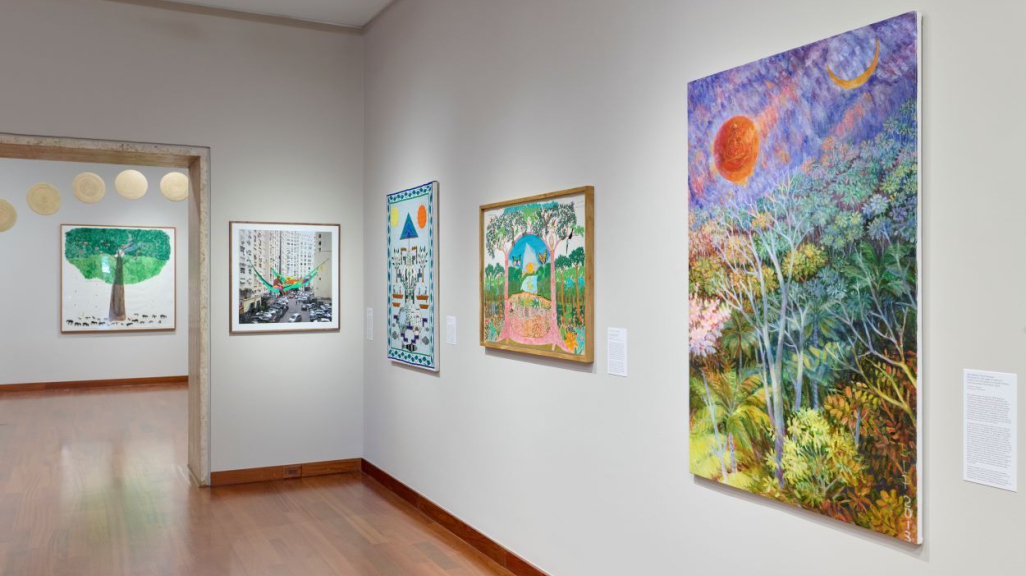
In the exhibition Amazonia Açu, on view through April 18, 2026, at Americas Society in New York, the curators, who come from the nine countries that make up the region, selected works that span time periods and mediums. Here, paintings hang next to baskets, and videos play close to ceramic pieces and sculptures. No art form is given priority over another. No piece resembles the other. And so the term “açu”, Tupi Guaraní for “expanding,” aptly describes the show, which quietly coalesces Western distinctions between art and craft, old and modern. It’s easy to picture the Amazon as a monolith, but the sheer diversity of techniques and the various stories on display here prove that there is much more to the region than meets the eye...