Americas Society
Council of the Americas
Uniting opinion leaders to exchange ideas and create solutions to the challenges of the Americas today
Election Guide: Venezuela's 2012 Vote
Tabs

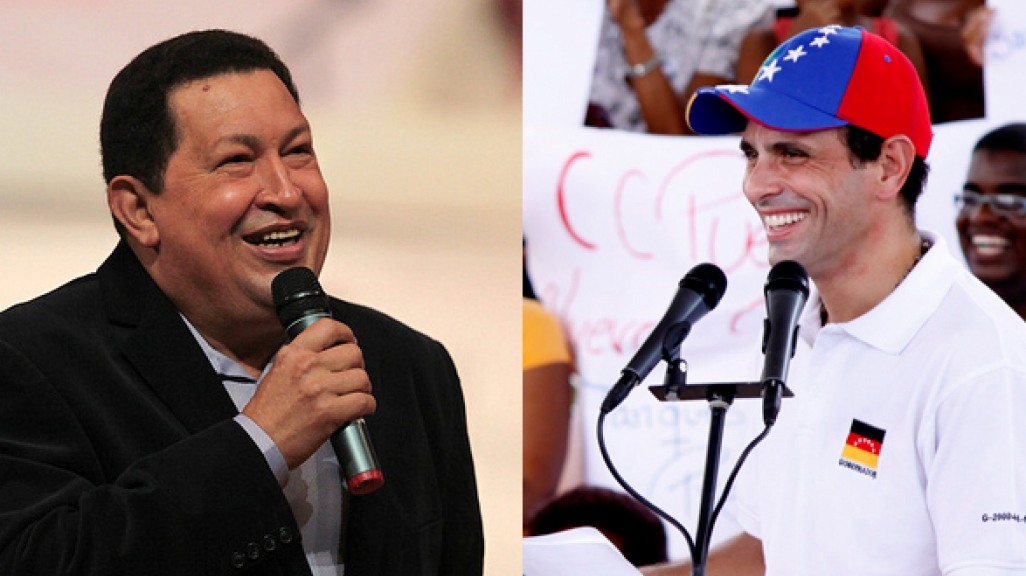
On October 7, over 18 million Venezuelans will be eligible to vote in a critical presidential election that could see a fourth term for President Hugo Chávez or a new administration under opposition leader Henrique Capriles. Chávez, of the United Socialist Party of Venezuela (PSUV), has been in power since 1999. He was reelected twice after a referendum in 2009 abolished term limits. In the hopes of unseating the current president, the country’s opposition parties united to create the Coalition for Democratic Unity (MUD).
For the first time in Venezuelan history, the opposition held a universal primary in February 2012, which Capriles won. Polls vary widely, and Chávez has led by a comfortable margin in many cases. For example, a Grupo de Investigación Social Siglo XXI poll released August 8 gave Chávez a 27-point lead. However, pollster Consultores 21 put Capriles ahead by 2 points in late August.
Get election coverage, links, polls, social media information, and more from AS/COA Online.
Rachel Glickhouse and Andreina Seijas contributed to this guide.
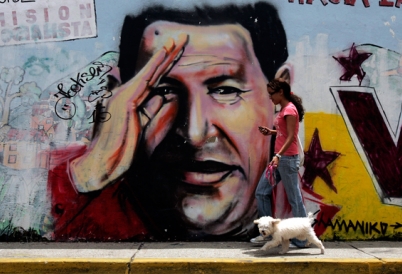
(Image: AP Photo)
Quick Facts
The election will take place on October 7, and the president will then take office on January 10, 2013. In Venezuela, presidential terms last six years. In the past, presidents were limited to two consecutive terms, but a 2009 referendum amended the constitution to abolish presidential term limits. There are no runoff elections; the winning candidate must gain the largest number of votes.
Voting is not mandatory in Venezuela, but recent elections saw high voter turnout. Some 74.7 percent of the electorate voted during the last presidential election in 2006, up from 63.45 percent when Chávez first won in 1998. The 2010 parliamentary elections also involved a 67.5 percent turnout. More voters than expected participated in the 2012 opposition primary—around 16.5 percent of the electorate.
According to the electoral registry, 19,119,809 Venezuelans registered to vote in October. Of that total, 99,478 are registered to vote abroad, with over 20,000 registered to vote in Spain alone. Voters outside of Venezuela could play an important role in the elections, since many expatriate voters tend to vote for the opposition. For example, in the 2004 referendum to oust Chávez, 97 percent of U.S.-based Venezuelans voted against him. Read about Venezuela’s expatriate voting laws and about the potential impact of Venezuelan voters abroad, as well as the process for Venezuelans to vote abroad.
But expatriate voters may face challenges to vote this year. Some voters reported impediments to registration, including long lines and limited consular hours. In addition, the government closed the Miami consulate in January 2012, forcing Venezuelan voters in that city to travel to New Orleans to vote in October.
Because of limited government information available about how to vote abroad, a number of websites and organizations provide information for Venezuelan expats. They include Voto Donde Sea, Embajadores del Voto, and Voto Joven. Capriles’ campaign is also aiding with voting abroad by providing information on where to vote and election-related events.
The youth vote will also be significant. The National Electoral Council reported that 87 percent of newly registered voters—over 100,000 people—are between 18 and 25 years old. The organization Voto Joven is helping register young voters for the first time.
News Coverage
- Venezuelan daily El Universal has an interactive election guide, including latest news, a guide of candidates, videos, polls, policy proposals, and more.
- Univision has a Venezuelan election portal with polls, news, videos, photos, forums, and more.
- Tal Cual has a listing of all recent news articles about the election.
- Ultimas Noticias has the latest news and videos about the election.
- It also has several interactive features, including an alphabetical infographic about important election information and an interesting guide measuring the candidates’ impact on Twitter.
- NTN24 has an election guide with information on February’s primary election, as well as links to past election coverage and the MUD’s platform.
- For a lighter take on the election, Reuters Factbox has quotes spanning two decades of Chávez’s career with his evolving ideas on everything from nationalization to foreign dignitaries.
See coverage in the days leading up to the election from the Americas Quarterly blog:
- Where Have All the Standards Gone? by Christopher Sabatini
- Venezuelans Abroad: The Obstacle Course to Sunday's Election by Andreina Seijas
- From Caracas. Mercosur and The Venezuela Elections, by Juan Victor Fajardo
- Momentum for Capriles Heading to Election Day, by Tomas Hernandez
- Venezuelans Voting in Madrid, by Laura Strazzaboschi
- A Venezuelan Living in New York Returns for the Election, by Diego Dsola
- Venezuelans Vote in London But Ballot Counting on Hold, Mariana Marval
- AQ Slideshow: Election Photos from Unidad Educativa Santo Tomas de Aquino in Caracas, by Laura Gonzalez
- AQ Slideshow: Election Photos from Colegio Eugenia Ravasco in Caracas, by Romina Hendlin
Candidates
Hugo Chávez is president of Venezuela, and represents the United Socialist Party of Venezuela (PSUV). A former military officer, he was first elected president in 1998 and took office the following year. Chávez survived a failed coup attempt in 2002, and a recall referendum voted down in 2004 allowed him to stay in office. In 2009, Venezuelans voted in favor of another referendum to abolish term limits, allowing Chávez to remain for three administrations.
Read Chávez’s government plan for 2013-2019.
Henrique Capriles is running for the opposition coalition, known as the Coalition for Democratic Unity (MUD). He ran for the opposition primary for the Justice First party. Capriles served as mayor of Caracas’ Baruta municipality from 2000 to 2008. He was elected governor of Miranda state in 2008, and stepped down in June 2012 in order to run for president.
Read the MUD’s government plan for 2013-2019. Also, see Capriles’ jobs plan.
The other minority candidates include María Bolívar of Partido Democrático Unidos por la Paz; Orlando Chirinos of Partido Socialismo y Libertad; Reina Sequera of Poder Laboral; Luis Reyes Castillo of Organización Renovadora Autentica; and Yoel Acosta Chirinos of Vanguardia Bicentenaria Republicana.
The Polls
In Venezuela, political polls vary widely in terms of both reliability and results. Some believe a number of pollsters receive government funding and, therefore, provide untrustworthy results.
Many polls give Chávez a comfortable lead. In early August, Datanalisis placed Chávez ahead with 46.8 percent of the vote and Capriles with 34.3 percent. Meanwhile, a Hinterlaces poll last month put Chávez ahead with 48 percent, compared to Capriles’ 30 percent of the vote.
However, Consultores 21 put Capriles ahead by 2 points in a late August poll. Varianzas also gave the candidates a close margin in August, estimating that Chávez leads with 49.3 percent compared to 47.2 percent for Capriles.
- Elecciones Venezuela offers a rundown of the most recent polls, showing six results from different firms.
- El Universal’s election portal includes some of the recent opinion polls.
- Ultimas Noticias lists the results of various polling firms with dates ranging from September 2011 to August 2012.
Electoral Resources
The National Electoral Council (CNE) provides information about the electoral process and requirements.
The Elecciones Venezuela website gives election information, including a calendar, an overview of candidates and political parties, and polls.
The Union of South American Nations (UNASUR) will send international observers to monitor the election.
The Organization of American States (OAS) may send observers. OAS Secretary General José Miguel Insulza said he hopes the organization will be invited to observe the election.
Monitoreo Ciudadano, a media watchdog group, analyzes how Chávez uses the media to campaign. The group also created the Cadenómetro to measure the number of hours Chávez advertises on Venezuelan TV and radio stations.
Social Media
During the 2012 election, social media will play an important role. Twitter has one of its largest user bases in Venezuela, where there are also over 9 million Facebook users. That brings Facebook’s penetration rate in Venezuela to 33 percent. Read about how social media is playing a role in the presidential campaign in an AS/COA News Analysis.
While both candidates are active on Twitter, Capriles has used Facebook as an integral part of his campaign strategy. In July, he held a forum on Facebook, the first of its kind in Latin America. Around 16,000 people tuned in as the candidate answered voters’ questions.
Access the candidates’ and parties’ Facebook pages:
Follow the candidates on Twitter:
See how the candidates stack up in terms of Twitter followers and number of tweets:
Follow the candidates’ campaign coordinators on Twitter:
- Chávez’s campaign manager Jorge Rodriguez
- Capriles’ campaign manager Armando Briquet
Follow the political parties on Twitter and Tumblr:
See the impact of each candidates’ Twitter activity:
Watch the candidates’ ads and public appearances on their Youtube channels:
See the political parties’ Youtube channels:
Explore the candidates’ photo streams:
The Road to Venezuela’s Elections
September 18, 2012
Panelists analyzed popular support for the candidates and citizen demands and interests, the effect of the president’s health on the campaign, and access to the media and freedom of expression....
Audio: Armando Briquet, Campaign Manager of Henrique Capriles Radonski - Venezuela
Tuesday, February 21, 2012
Armando Briquet, the campaign manager for Venezuelan opposition presidential candidate Henrique Capriles Radonski, discussed the Venezuelan elections in a February 21 conference call with AS/COA. (en español)...
In Venezuela, Chávez Wins Reelection against Reinvigorated Opposition
Friday, October 5, 2012 | Rachel Glickhouse
Chavez Faces Strongest Challenge this Weekend
Thursday, October 4, 2012 | The Washington Times
El preocupante silencio de la comunidad internacional ante Venezuela
Thursday, October 4, 2012 | Christopher Sabatini and Ryan Berger | El Nacional
O dia seguinte ao 7 de outubro venezuelano
Sunday, September 30, 2012 | Christopher Sabatini and Andreina Seijas | O Estado de São Paulo
Interview: President of Consultores 21 Polling Firm on Venezuela’s Election
Thursday, September 27, 2012
Interview: CPJ’s Carlos Lauría on Press Freedoms in Venezuela
Monday, September 24, 2012
Venezuelan Press Squeezed as Election Approaches
Monday, September 24, 2012 | Nathaniel Parish Flannery
The Road to Venezuela’s Elections: A Look at the Media, Public Opinion, and the Economy
Tuesday, September 18, 2012 | Andreina Seijas
Prior to Election, Venezuela Begins IACHR Withdrawal
Wednesday, September 12, 2012 | Rachel Glickhouse
Hugo Chávez, Strongman on the Run
Thursday, September 13, 2012 | Maclean's Magazine
President Hugo Chávez’ Campaign Vision for Venezuela: Militaristic and Top Down
Wednesday, August 22, 2012 | AQ Web Exclusive
Capriles vs Chávez Online: Venezuela’s Social Media Split
Monday, August 20, 2012 | Eve Ahearn
Despite Production Challenges, Venezuela Pursues Regional Oil Strategy
Tuesday, August 7, 2012 | Rachel Glickhouse
Venezuela’s Presidential Campaigns Get Underway
Tuesday, July 3, 2012 | Rachel Glickhouse
Venezuelan Presidential Campaigns Gain Momentum
Monday, June 11, 2012 | Rachel Glickhouse
Can the Diaspora Vote Influence Latin American Elections?
Thursday, May 10, 2012 | Mark Keller
Security Policy at the Fore in Venezuelan Presidential Campaigns
Friday, March 23, 2012 | Rachel Glickhouse
Chávez's Health Sets off Speculation in Venezuela and Abroad
Thursday, March 1, 2012 | Mark Keller
Capriles Radonski and His Vision for Venezuela
Thursday, February 23, 2012 | AQ Web Exclusive
Capriles Wins Venezuelan Primary to Become Chávez's Challenger
Sunday, February 12, 2012 | Mark Keller and Carin Zissis
Venezuela's Military: A Factor in the Upcoming Election?
Thursday, February 9, 2012 | AQ Web Exclusive
Venezuela Update: The Opposition Primary
Wednesday, February 8, 2012 | Rachel Glickhouse and Guillermo Zubillaga
Venezuela Update: Electoral Prospects for 2012
Thursday, October 27, 2011 | Ryan Berger and Guillermo Zubillaga